
I’ve now spent over a year running my own startup. I’m surrounded by people who are living the entrepreneur ‘grindset mindset’ life, working 12-hour days (according to social media). I’ve had to really think through my own take on it. I believe I’ve come up with a system which allows me to live a fulfilling, balanced life. I’m sure it’ll keep evolving
Where did the 80-hour work week come from?
Before jumping into why I don’t think working 12+ hour days is healthy or sustainable, or even productive, let’s discuss where this notion came from.
Way back in the 1700s, in early America, the average person was a farmer. Their workday consisted of many tasks, and when they finished those tasks, they were done. It was seasonal work, with different tasks depending on the time of year.

Way back even before that, early humans were hunter-gatherers. Their mindset on ‘work’ would have mainly consisted of finding food. There was no societal pressure to ‘work hard’, it was simply ‘can you find food or not’. If you found a meal in the first 40 minutes of the day, great. There was absolutely nothing wrong with relaxing and enjoying that meal for the rest of the day. In fact, it would be detrimental to spend the rest of the day ‘working; conserving energy and resting up for the next day’s hunt would be more productive.

So where did we go wrong? The average person today (at least in the working world) defines their value, consciously or not, by how ‘productive’ they are. This wouldn’t be such a bad thing; however, most people’s work today is not measurable by any set standard. It’s hard to quantify how much ‘work’ a marketing professional does, or an IT manager, or a software engineer. Different projects move at different paces, there’s no great metric to track most cognitively-intense work.
Because of this, we’ve started measuring our output by measuring our input. This makes sense when you consider the Industrial Revolution – when work largely shifted to factory assembly lines. Regardless of your focus, energy, or skills, the assembly line moved at the same pace. If you stood there and ‘did your job’, you would produce the same amount of value as the next guy. And the only way to distinguish yourself, and produce MORE value, would be to stay longer.

And so, the idea was born. Working more hours meant more production, more value, more money. The correlation between input and output was a linear one. If you put in 1 hour, you could produce 10 car wheels. If you put in 10 hours, you could do 100, and so on. Here’s what it would look like.
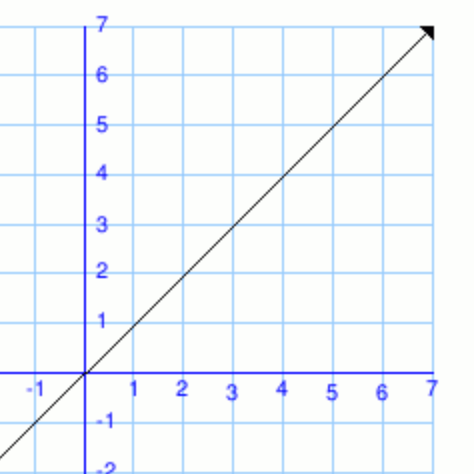
Given this logic, you SHOULD work as long as you can at the factory, until you drop of exhaustion.
But things are different today. In many knowledge worker jobs, the cognitive demand of work is the limiting factor, not the physical capacity of an individual. Designing software, writing a book, creating a marketing strategy – these are not factory jobs. There is no ‘right’ answer, and therefore the load on your brain is much higher. We weren’t built to be able to go full steam on these types of tasks ALL day long. In fact, research shows that the average individual is capable of about 2-3 hours of this type of focus per day, with the highest achieving individuals maxing out their capacity around 4 hours.
Think about it as a sprint vs a marathon. In terms of brainpower required, doing repetitive work like an assembly line is like running a mile at a 12 minute pace. But focusing intensely on something is more like running at a 6 minute pace. You can’t sustain it for as long. What that means is, the input -> output graph for this type of work looks more like this:
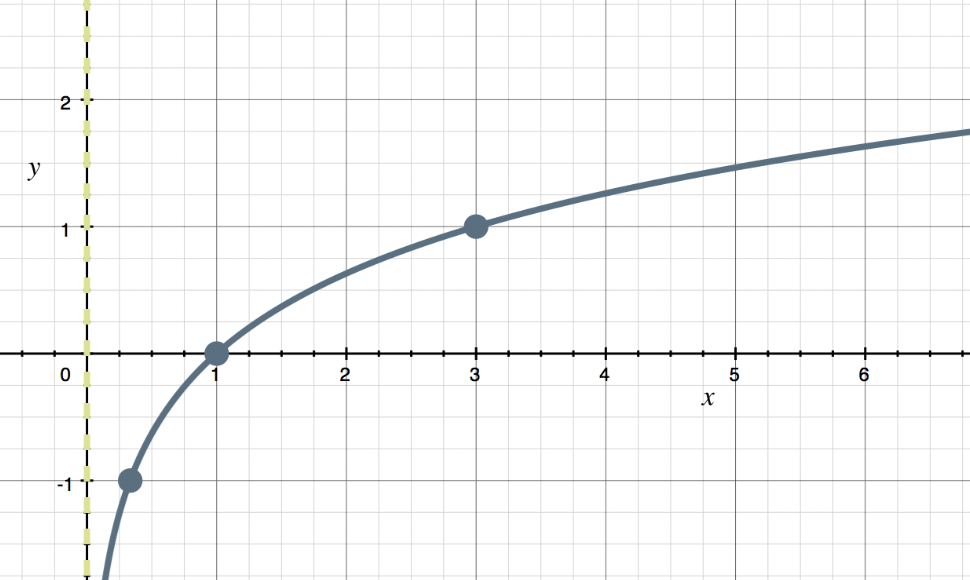
The first couple hours, when your brain is at full power, you can get a LOT done. You can cover a lot of ground.
But trying to sustain that over an 8 – 12 hour workday ends up producing diminishing returns. You spend more and more time accomplishing less and less. This doesn’t mean you’re lazy. It doesn’t mean there’s something wrong with you. If you sprinted at full capacity until you were totally out of energy, would you call yourself lazy when your body demanded you to walk instead of run? No. You would understand that you need rest, and you’d properly recover before sprinting again.
What this means for my workday
I have the benefit of managing my own time. I try to stop using the Industrial Revolution lens to evaluate how hard I’m working (hours put in) and am trying to use the hunter-gatherer/farmer lens instead (what tasks did I accomplish to move forward).
This results in me working less hours, but accomplishing more. I don’t waste time being ‘busy’, I just prioritize what actually needs to be done, eliminate distractions, and accomplish it.
I find that I am most productive and energized in the morning, so that is when I will do my ‘deep work’.
I often set a timer on my watch for about 40 minutes and lock in. I find that I can accomplish most tasks in 40 minutes. If it takes less than 30-40 minutes, I probably didn’t need to focus that hard and could have done it later in the day when my brainpower is already expended. If it’s going to take more than 40 minutes, I need to re-evaluate the task and break it down into smaller pieces.
I have noticed that a task will fill the space available. If I give myself ’till the end of the day’ or ‘before lunch’, that’s when the task is done. But when I set hard limits, outlining exactly what I will produce, and keep my time limits shorter than 1 hour, I get it done in that time. Think about it. Did you ever had a school project due at the end of the semester? Giving it THAT much time makes it seem like a huge deal, and it sucks a ton of your time. Either that, or you save it for the last day of the semester and end up sprinting to do all of it in one all-nighter. Proving that it didn’t really require that much time.
So what about non-deep work tasks?
In my current role as the CTO and lead dev for our startup, I don’t have many responsibilities other than building the product. This means that it is essential for me to maximize my deep work time and the productive hours my brain has to offer. It also means that I need to properly recover and let my brain reset. I have often spent hours slogging away at something, struggling to figure it out or get it done, only to take a mental reset by working out, or by going to sleep and coming back the next day, only to solve the problem in 20 minutes.
As I get new responsibilities, like meetings with clients, hiring and managing employees, and collecting feedback from customers, it will be crucial for me to continue to protect my deep work hours, and put the less cognitively-intense tasks later in the day. As C.S. Lewis said:
“If it’s your job to eat a frog, it’s best to do it first thing in the morning. And if you have to eat two frogs, eat the biggest one first.”

Luckily my deep work hours are much more enjoyable than eating a frog. Fully focusing is the highlight of my day because I get so much done. But then it’s important to realize when my brain is running on fumes, and get some recovery in. It’s counterproductive to keep pushing yourself when you simply can’t think straight anymore.
It’s not all about output
Maybe some of you will argue with me and say that, even if you are producing less per hour if you work 12 hour days, you’re still doing more TOTAL work.
You know what? You might be right. If I go home at 5-6 PM, having accomplished my work goals for that day, is there still more I could give? The answer is, probably. I may be leaving 10% of my potential work ‘undone’. However, you MUST consider the opportunity cost of your time. Time spent working from 6-11 PM (not very productive), also means time NOT spent doing literally anything else. For example, here are some things I do each week which I consider very productive (or at least rejuvenating), even though they don’t directly move my business forward:
- Talk to my wife
- Eat food
- Exercise
- Spend time with friends
- Sleep
- Volunteer at a horse-riding school
- Do activities with the young men in my church group
- Watch TV and turn my brain off
- Learn jazz piano
- Play chess
- Call my parents
- Practice dunking a basketball (goal for the last 4 years)
If I worked 40% more, and realistically produced 10-20% more output for my business, that might look good on paper. But I wouldn’t be developing as a person in all these important ways. I want my life to be defined by more than how I made money.
The other day I met with the founder and CEO of a large, well-known company that generates well over 100M in annual revenue. At the end of our 30 minute advisory call, I asked him one final question.
“What is the ONE thing I should focus on for the next 30 days?”
He told me to make sure all the other areas of my life were in balance -that I was investing in my health, hobbies and relationships – so that I would have the energy to keep doing this extremely difficult job of being an entrepreneur.
So there you have it. Hope this is helpful. Think about what you can realistically get done, and make sure that what you’re focusing on is the MOST important thing. Then, when you’re done with that thing, go home. Go do something with your life. Develop, grow, serve. Life is short, let’s make the most of it.
Writing this from the airport on my way to a 10-day trip in Thailand. Hoping for some major rejuvenation!
 Free By 35
Leave a comment